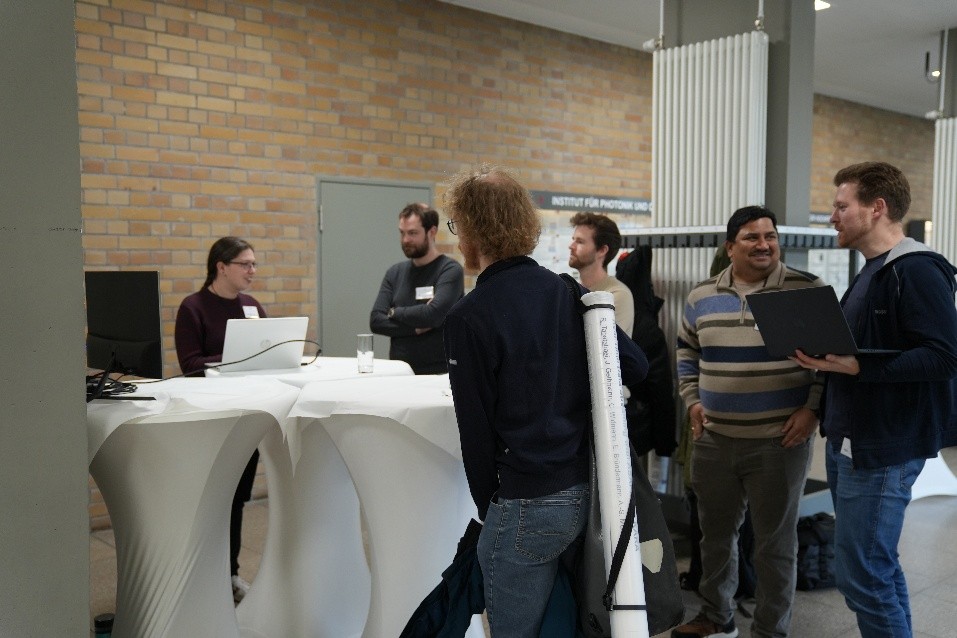
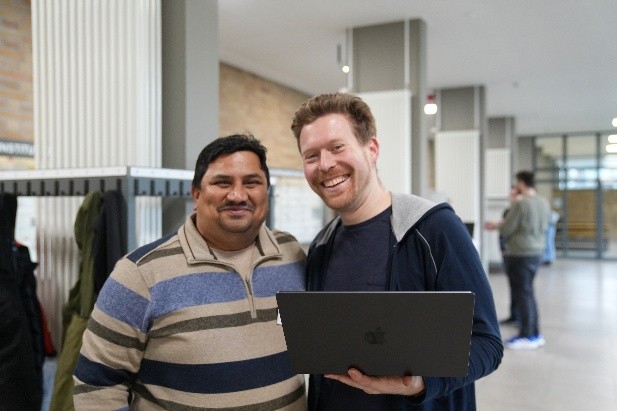
Zusammenfassung des World Cafés beim DAPHNE4NFDI-Jahrestreffen am 25. März 2026 @ KIT
Am letzten Tag des DAPHNE4NFDI-Jahrestreffens wurde für die Teilnehmenden des Jahrestreffens ein praxisorientierter Workshop im World-Café-Format organisiert. In diesem interaktiven Format arbeiteten die Teilnehmenden in kleinen Gruppen praxisnah mit realen Forschungsdatenbeispielen – von Datenmanagementplänen und Metadaten bis hin zu Software- und Publikationsworkflows. Nach einer Einführung durch Florian Maurer (KIT) rotierten die Teilnehmenden zwischen fünf thematischen Stationen, an denen sie im direkten Austausch mit Expertinnen und Experten sowie anderen Teilnehmenden gemeinsam praktische Lösungen entwickelten. Jede Sitzung dauerte 35 Minuten, davon 10 Minuten Einführung und 25 Minuten für Brainstorming-Diskussionen. Auf diese Weise konnte jede teilnehmende Person alle fünf Stationen besuchen, praktische Lösungen kennenlernen und sich aktiv in die Diskussionen einbringen.
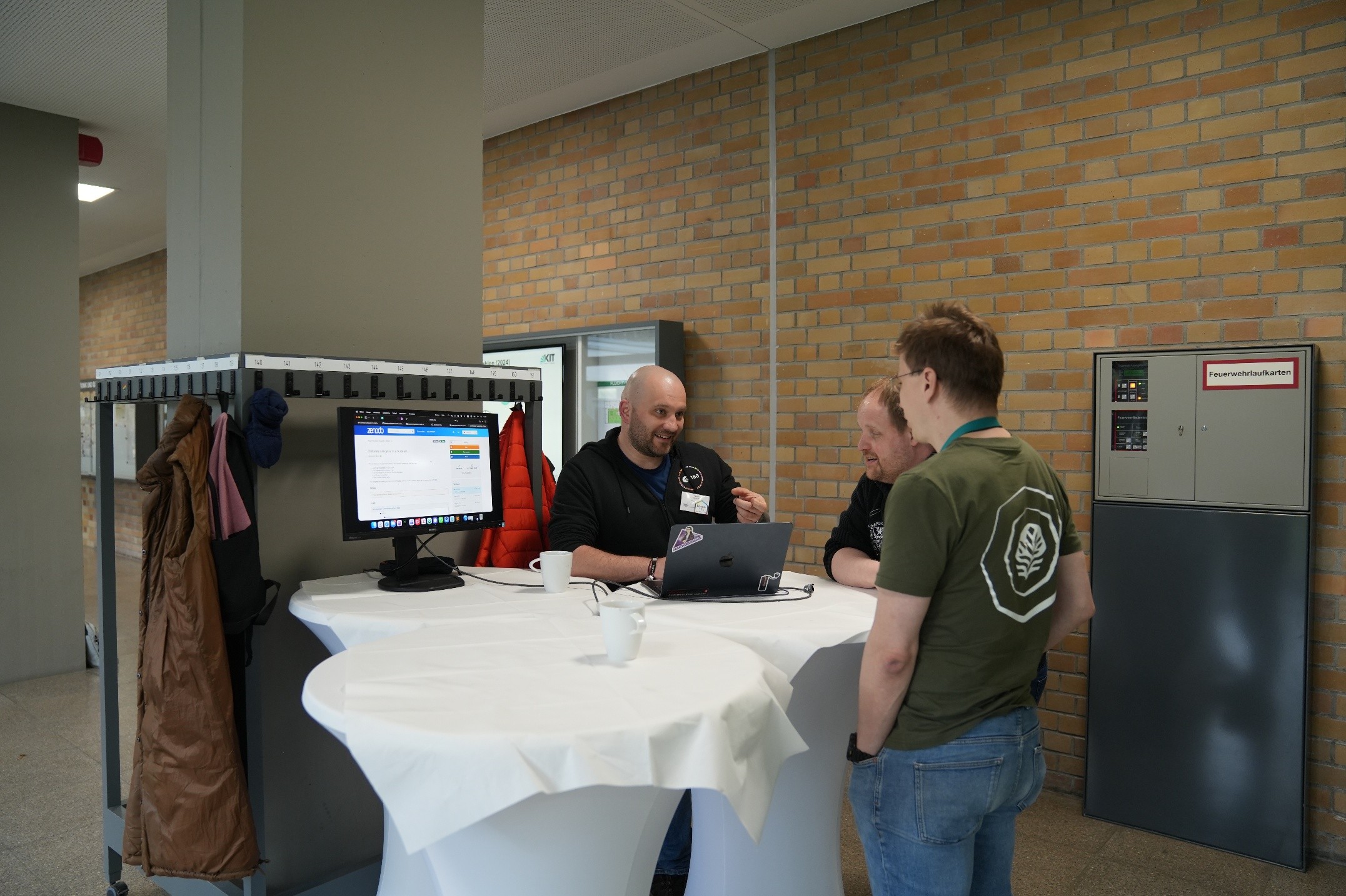
Die erste Station wurde von Martin Reinhardt (Base4NFDI) moderiert und konzentrierte sich auf Softwaremanagement, mit ausgewählten Aspekten des Software Development Life Cycle (SDLC). Die Teilnehmenden erhielten eine Einführung in die Erstellung einer minimalen Python-Flask-Anwendung, das Einrichten eines Git-basierten Repositoriums sowie dessen Anreicherung mit Metadaten. In diesem Zusammenhang zeigte Martin Reinhardt unter dem Titel „Software Lifecycle in a Nutshell“, wie die Qualität von Forschungssoftware durch Tests mithilfe von Test-Frameworks verbessert werden kann. Ein zentraler Aspekt der Sitzung war die Umsetzung der FAIR-Prinzipien für Forschungssoftware, demonstriert anhand der GitHub-Zenodo-Integration, die eine persistente Identifikation und eine verbesserte Zugänglichkeit von Quellcode ermöglicht. Die Sitzung schloss mit einem kurzen Ausblick auf containerisierte Lösungen und damit verbundene Automatisierung.
Die zweite Station, präsentiert von Charlotte Neidiger (re3data / KIT), widmete sich dem Thema „Metadaten und Repositoriumsmetadaten: re3data unterstützt die NFDI.“ Während der kurzen Einführung wurde ein Überblick über registrierte PaN-Datenbanken auf der re3data-Plattform als praktisches Beispiel gezeigt. Die bei re3data verfügbaren Datenbanken können nach fachspezifischen Kriterien, Methoden, Messungen usw. durchsucht werden. Zu den verfügbaren Metadatenstandards gehören Dublin Core, DataCite, DCAT, Repository-Developed Metadata Schemas und CIF. Anhand der RefXAS-Datenbank als DAPHNE-Anwendungsfall wurden in der Diskussion außerdem die unterschiedlichen Registrierungsanforderungen erläutert, die als verpflichtend, empfohlen oder domänenspezifisch eingeordnet wurden.
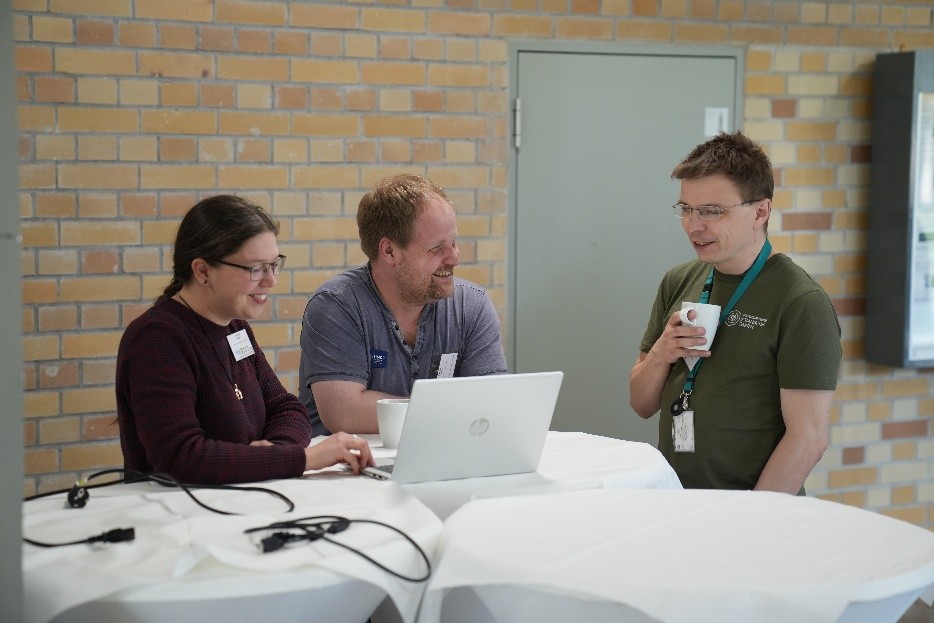
Am dritten Tisch, betreut von Hendrik Goßler (KIT) und Johannes Riedel (KIT), wurde ADACTA als praxisnahe Plattform für datengetriebenes Experimentieren vorgestellt. Im Mittelpunkt stand nicht nur die Einführung in die Software, sondern auch deren direkte Anwendung: In einer interaktiven Hands-on-Sitzung konnten die Teilnehmenden selbst nachvollziehen, wie komplexe experimentelle Aufbauten als nahtlos verbundene digitale Experimentierumgebungen abgebildet werden können. Anhand realistischer Anwendungsfälle zeigte die Sitzung, wie ADACTA Daten, Geräte und Prozesse effizient miteinander verknüpft und dadurch Transparenz, Nachvollziehbarkeit und Wiederverwendbarkeit über den gesamten experimentellen Lebenszyklus hinweg schafft. Die offene Workshop-Atmosphäre ermöglichte es den Teilnehmenden außerdem, eigene Fragen einzubringen und konkrete Anwendungsmöglichkeiten für ihre individuellen Forschungs- und Entwicklungsprozesse zu diskutieren. Die Station bot daher nicht nur Einblicke in die Technologie, sondern auch unmittelbaren praktischen Nutzen – von der strukturierten Datenerfassung bis hin zur fundierten Entscheidungsunterstützung.
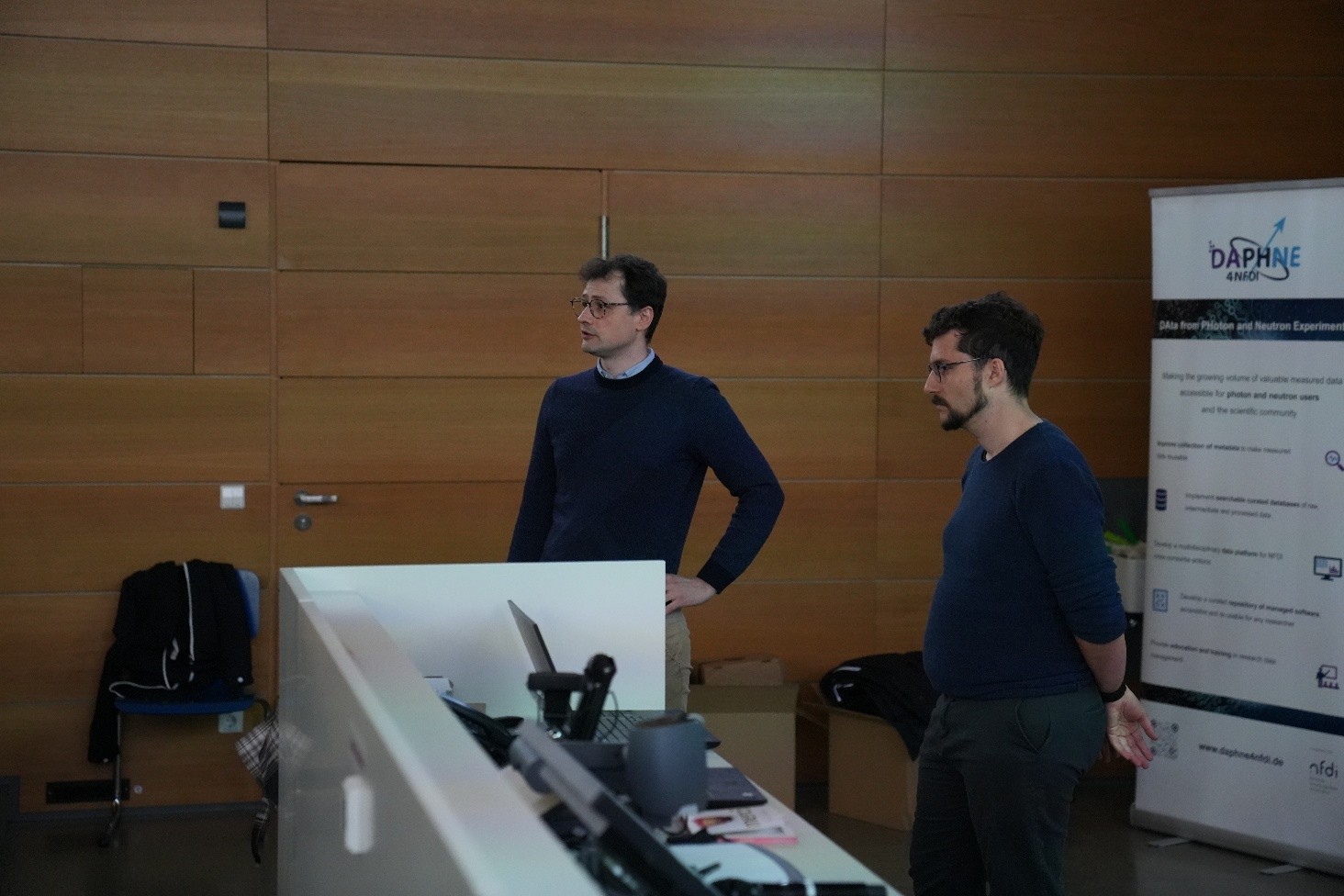
An der vierten Station vermittelte Helena Simek Tosino (KIT) den Teilnehmenden praktische Erfahrungen mit der Chemotion/LabIMotion-Infrastruktur. Gegeben wurde ein praxisnaher Überblick über den End-to-End-Workflow von Chemotion, der alle Schritte vom experimentellen Design über Datenerhebung und Charakterisierung bis hin zur Offenlegung und Veröffentlichung von Ergebnissen abdeckt. Zentrale Aspekte – wie die automatisierte Metadatenextraktion, die Möglichkeit, strukturierte und standardisierte Daten zu teilen und bereitzustellen, sowie das Potenzial, über die generische Erweiterung LabIMotion auch Domänen und Communities jenseits der (organischen) Chemie zu unterstützen – wurden hervorgehoben. Darüber hinaus wurden die Reservierung und Vergabe von DOIs sowie die Verknüpfung von Daten mit physischen Materialien im Chemotion Repository demonstriert.
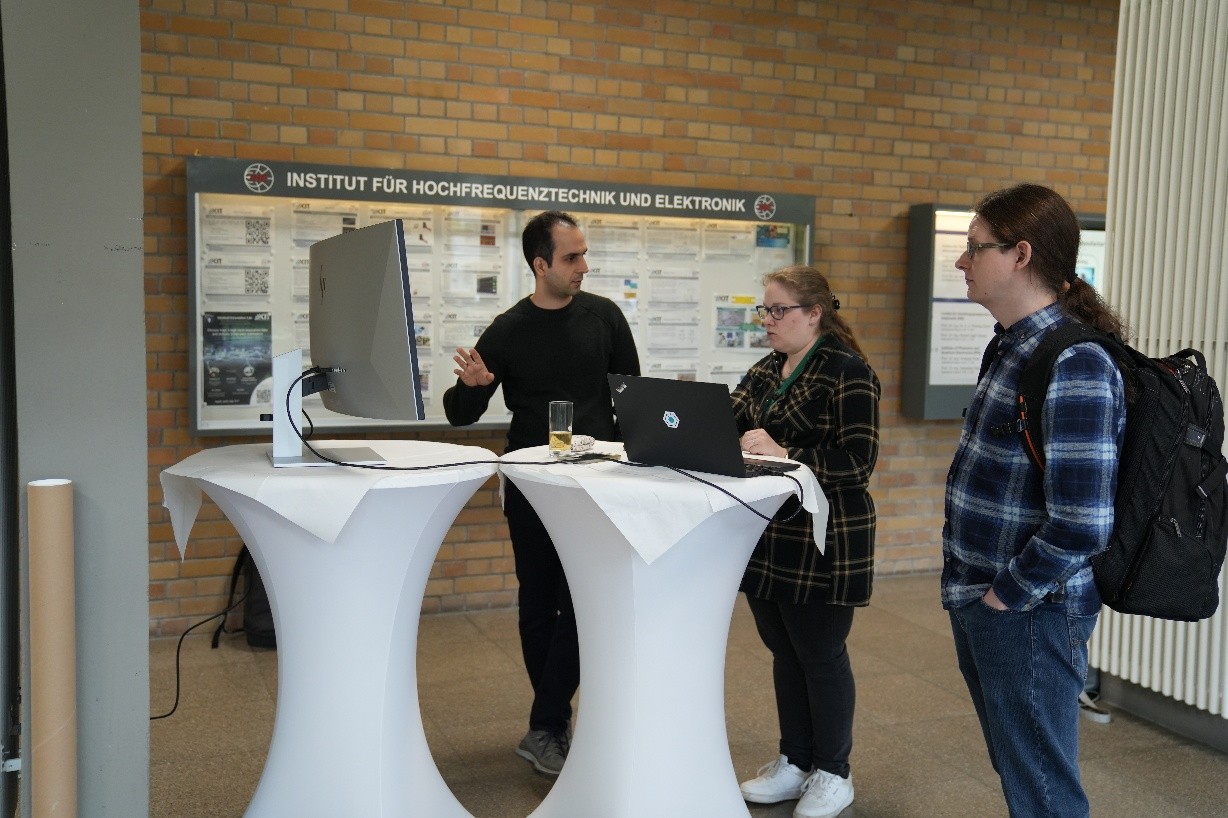
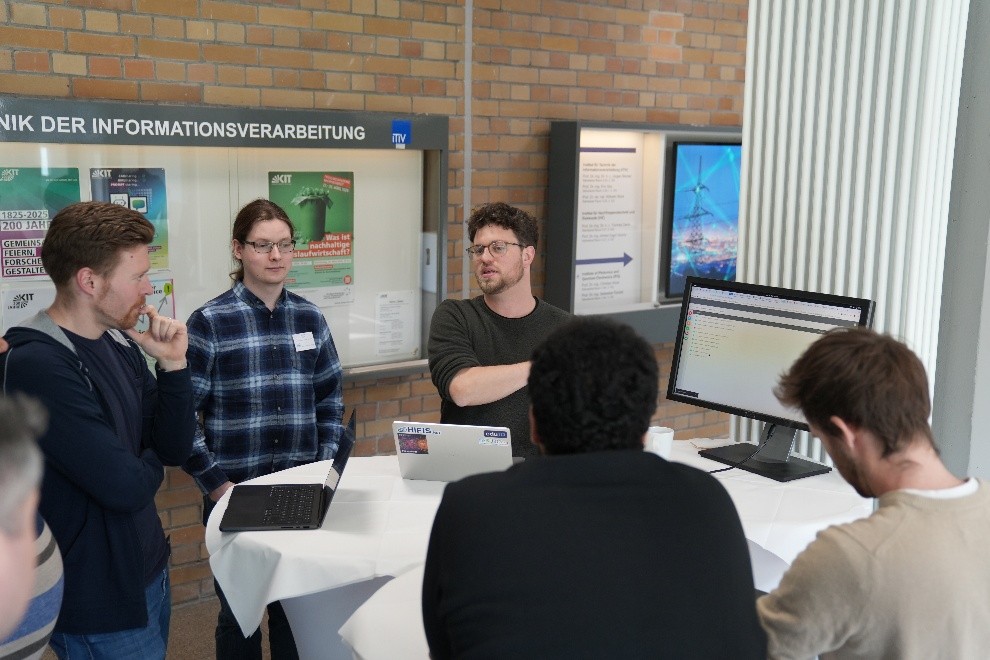
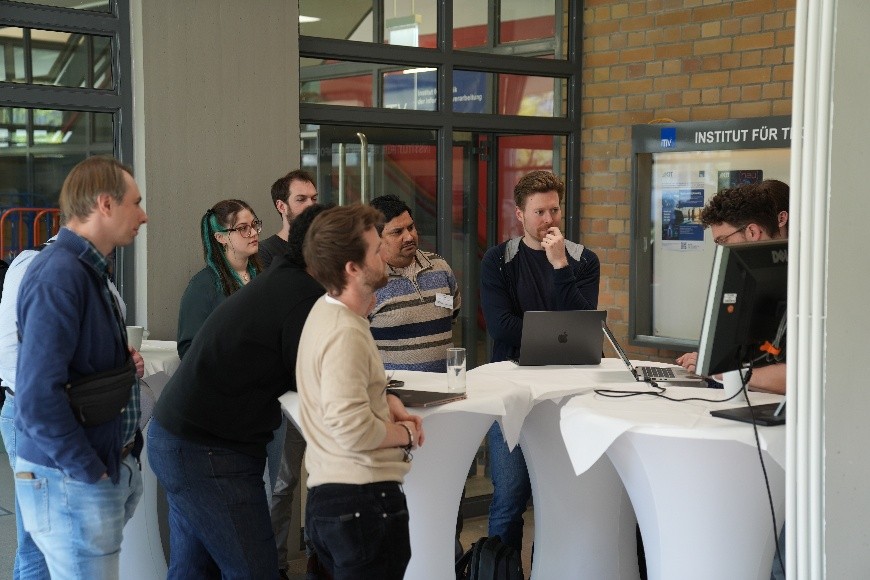
Die fünfte Station wurde von Tim Wetzel (DESY) zum Public-Data-Repository am DESY präsentiert. Dabei zeigte er, wie Daten über sisyphos mit einem Metadatenschema eingereicht werden können und wie sich aus einer generalisierten Vorlage mit LinkML ein domänen- bzw. technikspezifisches Metadatenschema erstellen lässt. Während der Einführung stellte Tim die öffentliche SciCat-DESY-Instanz als Lösung für verschiedene im Rahmen von DAPHNE entwickelte Plattformen vor. Die Möglichkeit, Plattformen wie die im Rahmen von DAPHNE entwickelte RefXAS-Datenbank anzubinden, wurde auf Grundlage der spezifischen Anforderungen an eine vollständig entwickelte Schnittstelle diskutiert. Das in LinkML geschriebene Metadatenschema ist vollständig flexibel: Plattformentwicklerinnen und -entwickler können ihr eigenes Schema definieren oder das bereits entwickelte Schema verwenden. DOIs können für einzelne Datensätze oder Sammlungen von Datensätzen bereitgestellt werden.
Diese praxisorientierten Sitzungen im World-Café-Format boten einen besonders wirkungsvollen Rahmen, um domänenspezifische Themen gemeinsam zu erkunden, konkrete Bedürfnisse der Teilnehmenden aufzugreifen und praktische Lösungen für die eigenen Forschungsworkflows zu diskutieren. Gleichzeitig förderte der interaktive Austausch nicht nur die Zusammenarbeit innerhalb der DAPHNE4NFDI-Community, sondern wirkte auch sehr motivierend auf die Teilnehmenden und erweiterte ihre Perspektiven auf verfügbare Werkzeuge und Services.